

Pennsylvania Supreme Court Restricts Mental Health Commitment Challenges and Firearms Rights
ahmedahmii30 • July 21, 2025

July 21, 2025

The Pennsylvania Supreme Court recently issued its decision in In re: Nancy White Vencil, 90 MAP 2015, overturning a well-regarded ruling by the Pennsylvania Superior Court. The Superior Court had found that when someone challenges the validity of an involuntary mental health commitment under 18 Pa.C.S. § 6111(g)(2), the challenge should be heard de novo. It also held that the individual only needed to meet a clear and convincing evidence standard, and that the burden of proof should rest with the Commonwealth. The Supreme Court disagreed and rejected that framework.

According to the Court, the plain language of section 6111.1(g)(2) means that a court of common pleas can only review whether there was enough evidence to justify the original 302 commitment. That review is limited to the information the physician had at the time they decided to commit the person. The court must view that information in the light most favorable to the physician, as the original decision-maker, and decide whether their findings were supported by a preponderance of the evidence.

Although the Court recognized that “By legislative design, there is no judicial involvement in the decision to effectuate a 302 commitment and no right to appeal the physician’s decision,” meaning that no due process protections are built into the process (an argument Mrs. Vencil apparently did not raise — see pdf p.18: “Vencil has not challenged the due process protections provided by Section 302 of the MHPA. Nor has she raised a due process argument in connection with her right to keep and bear arms under the United States and/or Pennsylvania Constitutions”), the Court still held that a trial court’s role is limited. It may only review the physician’s original findings to determine whether the evidence the physician had at the time — as documented in records created at that time — supports the conclusion that the person met at least one of the specific, statutorily defined grounds for involuntary commitment

The Court notably did not address whether the records required for an involuntary commitment meet the sufficiency standards under 50 P.S. § 7302 and its implementing regulations. This omission is likely because the issue was not raised during the case, and therefore the Court did not consider it. Section 7302 governs the process for emergency involuntary examinations and treatment, including the application, warrant issuance, and physician evaluation necessary to authorize a commitment of up to 120 hours. The statute and related regulations set specific procedural and evidentiary requirements for these commitments, which remain an important but unresolved aspect in this context.

The Court made it clear: if the Legislature had wanted people to have a broad right to appeal 302 commitments under the MHPA, it could have written that into the law — but it didn’t. It could have allowed for a full, new hearing from scratch (de novo), but it didn’t do that either. Instead, under section 6111(g)(2) of the Uniform Firearms Act, all someone gets is a narrow check: the trial court can only look back at whether there was enough evidence at the time to justify the commitment in the first place.

It’s also worth pointing out that, in footnote 4 (pdf p. 7), the Court noted that the Pennsylvania State Police had waived any argument about the statute of limitations. That’s a detail with bigger implications than it might seem — because the General Assembly hasn’t actually set a clear statute of limitations for challenging the sufficiency of a civil mental health commitment. The Court flagged the waiver but didn’t clarify what deadline, if any, should apply to these kinds of challenges going forward. That uncertainty is troubling and leaves the door open for more confusion down the line.

For all these reasons — especially the lack of real due process protections — it’s crucial that the General Assembly step up and pass new legislation to fix how mental health commitment appeals are handled. Any new law needs to fully respect and protect due process rights from start to finish.

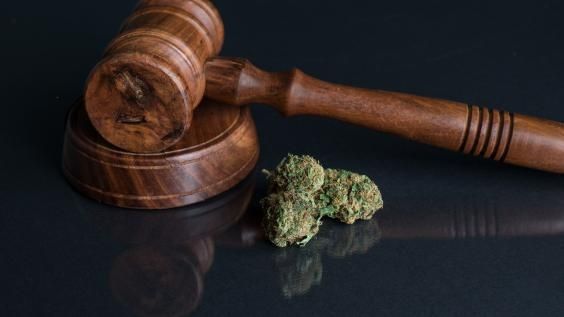
Wooden gavel beside a small pile of cannabis buds on a dark reflective surface.
By ahmedahmii30 • July 20, 2025
Momentum for marijuana legalization in the United States is stronger than ever. Despite resistance from the current Attorney General, a clear majority of Americans now support legal reform. Already, 30 of 50 states permit marijuana use for medical or recreational purposes—a striking sign of how dramatically public opinion and policy have shifted. As more states […] The post Local Marijuana Decriminalization in Pennsylvania: Navigating State vs. Local Law appeared first on Prince Law Offices, P.C.

Judge’s gavel resting on a green book atop a wooden surface
By ahmedahmii30 • July 16, 2025
Many Pennsylvanians have past criminal convictions that were affected by the PA “Clean Slate” law. This law, passed in 2018 and expanded in 2023, aimed to scrub these convictions from records. However, it doesn’t mean the record is entirely gone or that all consequences disappear. While private employers and the public generally cannot access a […] The post Understanding Pennsylvania’s Clean Slate Law and Its Impact on Firearm Rights appeared first on Prince Law Offices, P.C.

Healthcare-themed illustration with globe, family, hospital icons, and a hand writing on a document
By ahmedahmii30 • July 14, 2025
Introduction “Every new beginning comes from some other beginning’s end,” so eloquently stated by the ancient philosopher Seneca. His words resonate profoundly when it comes to planning our futures, especially in today’s fast-paced and unpredictable world. Embracing the certainty of change, it becomes essential to take control of our final wishes through Wills and Advance […] The post Wills, Powers of Attorney, and Healthcare: A Guide for Families and Small Business Owners appeared first on Prince Law Offices, P.C.

Show More →
