
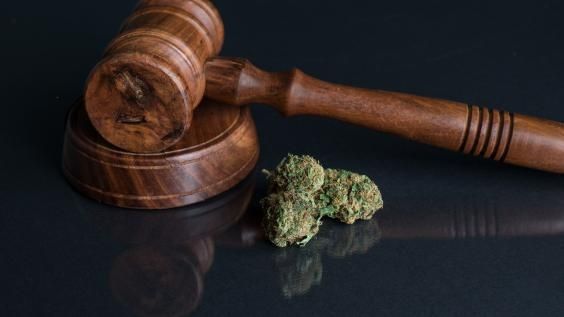

Local Marijuana Decriminalization in Pennsylvania: Navigating State vs. Local Law
ahmedahmii30 • July 20, 2025

July 20, 2025

Momentum for marijuana legalization in the United States is stronger than ever. Despite resistance from the current Attorney General, a clear majority of Americans now support legal reform. Already, 30 of 50 states permit marijuana use for medical or recreational purposes—a striking sign of how dramatically public opinion and policy have shifted.

As more states adopt legalization, they must navigate the conflict between their policies and marijuana’s federal classification as a Schedule I narcotic—reserved for substances considered highly dangerous and lacking medical value. This outdated federal stance not only contradicts state-level progress but also creates legal and regulatory obstacles. The result is a patchwork of laws where state innovation clashes with federal restrictions, causing challenges in areas like banking, commerce, and enforcement.

Despite these hurdles, support for marijuana reform keeps growing, highlighting the urgent need for a unified approach that aligns federal law with shifting public attitudes and state policies.

Marijuana’s status as a Schedule I drug is both outdated and misleading. While federal law lags behind, real change often begins at the local level. In Pennsylvania, several cities are leading the way by passing ordinances that decriminalize marijuana possession. Philadelphia, Pittsburgh, Harrisburg, Allentown, York, and, most recently, Bethlehem have all reduced penalties for possessing small amounts—typically 30 grams or less—reclassifying it from a criminal offense to a minor civil violation punishable by a modest fine.

These local reforms show a growing commitment to more practical and compassionate drug policies, reflecting a shift in how communities view marijuana use and the broader criminal justice system.

Local efforts to decriminalize marijuana in Pennsylvania stand in clear conflict with the state’s strict drug laws. Under the Pennsylvania Controlled Substance, Drug, Device, and Cosmetic Act (35 P.S. §780-113(a)(16)), it remains illegal to possess marijuana without a valid medical prescription. Classified as a Schedule I substance, marijuana is grouped with drugs considered to have no accepted medical use and a high potential for abuse.

State penalties remain harsh: possession of 30 grams or less of marijuana flower or up to 8 grams of hashish is a misdemeanor, carrying up to 30 days in jail and/or a $500 fine. Possessing larger amounts can bring six to twelve months in jail and fines up to $5,000.

This disconnects between local decriminalization ordinances and state law underscores the persistent tension—and legal uncertainty—surrounding marijuana regulation in Pennsylvania.

When local ordinances decriminalize marijuana possession, they often clash with Pennsylvania’s Controlled Substance Act (CSA), which generally takes precedence under the principle of state preemption. So, even though cities like Philadelphia and Pittsburgh have reduced penalties for small amounts, stricter state laws still apply. Under the CSA, possessing 30 grams or less of marijuana flower or up to 8 grams of hashish is a misdemeanor punishable by up to 30 days in jail and/or a $500 fine. Many local law enforcement agencies argue that the CSA’s explicit rules on controlled substances leave no room for local governments to alter those penalties.

In practice, this creates legal uncertainty: while local ordinances aim to treat small-scale possession as a minor offense with just a fine, individuals can still face state charges with harsher penalties. Unless the legislature amends the CSA or courts decide otherwise, state law remains the final authority—and its penalties continue to apply despite local decriminalization efforts.

In Holt’s Cigar Co. v. City of Philadelphia, 608 Pa. 146 (2011), the Pennsylvania Supreme Court ruled that the Controlled Substance Act does not automatically bar local regulation aimed at controlled substances. The Court rejected the claim that the Act requires total statewide uniformity. Instead, it found that local ordinances are allowed unless they create an “irreconcilable conflict” with the CSA. The decision clarified that the test for preemption is whether it is impossible to comply with both the state law and the local ordinance, or whether the local law undermines the CSA’s purpose.

It is a well-established principle that when the legislature enacts broad prohibitory laws regulating a particular activity, local governments—acting within their limited authority—may still adopt additional regulations that support and advance the goals of the state law. These local rules must be tailored to address the specific needs of their communities and must remain reasonable in scope. In other words, unless a local ordinance directly contradicts the state law or undermines its purpose, municipalities have the authority to impose supplementary regulations that complement the overarching legislative framework. This balance allows localities to respond effectively to unique circumstances while respecting the general regulatory scheme established by the state.

In an intriguing example of local reform, the city of Bethlehem took a significant step on June 26, 2018, when its mayor signed Bill No. 16-2018 into law. This ordinance decriminalized possession of up to 30 grams of marijuana or eight grams of hashish, as well as possession of marijuana paraphernalia and personal marijuana use, reclassifying these acts as summary offenses rather than criminal ones. The law establishes a tiered fine system: a $25 penalty for a first offense, increasing to $50 for a second, $100 for a third, and $150 for a fourth offense, with the option of eight hours of community service in lieu of the highest fine. This measured approach reflects Bethlehem’s effort to reduce the burden of minor marijuana offenses on both individuals and the local justice system, while still maintaining some level of accountability.

Enforcing marijuana laws in Bethlehem is uniquely complicated because the city spans two counties: Lehigh and Northampton. Bethlehem’s local ordinance decriminalizes possession of up to 30 grams of marijuana or eight grams of hashish, but how that ordinance is enforced depends on the county.

Lehigh County District Attorney Jim Martin insists that Pennsylvania’s Controlled Substance Act (CSA) overrides local ordinances, so police in the Lehigh County portion of Bethlehem must enforce state law, treating possession as a misdemeanor with potential jail time. In contrast, Northampton County District Attorney John Morganelli supports the city’s ordinance, allowing police to issue summary citations with fines instead of pursuing criminal charges.

This divide means someone caught with a small amount of marijuana in Bethlehem could face very different consequences depending solely on which county they’re in: possible jail time in Lehigh, or just a fine in Northampton. The split has created confusion for residents and law enforcement alike, as Bethlehem officers technically have discretion to charge under either state law or the local ordinance—but the conflicting stances from the two district attorneys make consistent enforcement challenging.

City officials and advocates argue that the ordinance better reflects community values and reduces unnecessary criminal records, while opponents emphasize that state law still takes precedence.

Bethlehem’s situation highlights the broader tension in Pennsylvania’s marijuana policy, where local reforms clash with state statutes, creating unequal treatment within the same city. With elections approaching, the future of marijuana enforcement in Bethlehem and the region could shift yet again.

Silhouette of a judge’s gavel before courthouse columns in blue light
By ahmedahmii30 • July 21, 2025
The Pennsylvania Supreme Court recently issued its decision in In re: Nancy White Vencil, 90 MAP 2015, overturning a well-regarded ruling by the Pennsylvania Superior Court. The Superior Court had found that when someone challenges the validity of an involuntary mental health commitment under 18 Pa.C.S. § 6111(g)(2), the challenge should be heard de novo. […] The post Pennsylvania Supreme Court Restricts Mental Health Commitment Challenges and Firearms Rights appeared first on Prince Law Offices, P.C.
Judge’s gavel resting on a green book atop a wooden surface
By ahmedahmii30 • July 16, 2025
Many Pennsylvanians have past criminal convictions that were affected by the PA “Clean Slate” law. This law, passed in 2018 and expanded in 2023, aimed to scrub these convictions from records. However, it doesn’t mean the record is entirely gone or that all consequences disappear. While private employers and the public generally cannot access a […] The post Understanding Pennsylvania’s Clean Slate Law and Its Impact on Firearm Rights appeared first on Prince Law Offices, P.C.

Healthcare-themed illustration with globe, family, hospital icons, and a hand writing on a document
By ahmedahmii30 • July 14, 2025
Introduction “Every new beginning comes from some other beginning’s end,” so eloquently stated by the ancient philosopher Seneca. His words resonate profoundly when it comes to planning our futures, especially in today’s fast-paced and unpredictable world. Embracing the certainty of change, it becomes essential to take control of our final wishes through Wills and Advance […] The post Wills, Powers of Attorney, and Healthcare: A Guide for Families and Small Business Owners appeared first on Prince Law Offices, P.C.

Show More →
